

Kaziranga at the Breaking Point: When a Park’s Future Becomes a People’s Fight
On a humid August morning in 2026, a crowd gathered on the roads around Kaziranga not with guns, but with placards, flags, and a simple demand: “Let us live, let the rhino live.” For decades, this UNESCO World Heritage site in Assam has been celebrated as a conservation success story, home to the iconic one‑horned rhino, elephants, tigers, and vast grasslands that look like they belong in another century. But behind the postcard views lies a growing human story—of villagers who feel squeezed between a shrinking eco‑zone, expanding tourism projects, and laws they say ignore their rights.
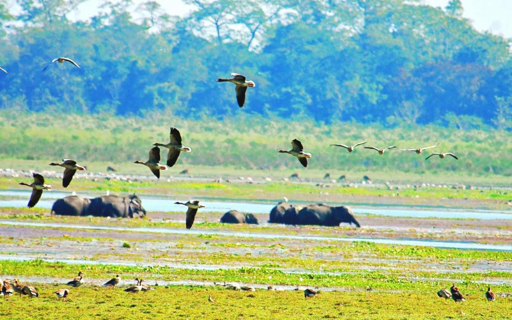
Kaziranga’s wetlands and grasslands support rhinos, birds, and local livelihoods—but also sit at the centre of the ESZ and land‑rights dispute.
What changed in August 2026?
The spark came when Assam’s Chief Minister Himanta Biswa Sarma announced from Bokakhat that the state would ask the Centre to formally notify Kaziranga’s Eco‑Sensitive Zone (ESZ) at around one kilometre, instead of the default 10‑km buffer. For the government, this was about “balancing” conservation with development: allowing people to build homes, run small businesses, and use their land without being trapped inside a wide restriction zone.
For many fringe villagers, the message was clear and welcome: a narrower ESZ could mean jobs, tourism footfall in their villages, and relief from what they see as an overbearing 10‑km rule. “The 10‑km demand is the cause of our problems,” some residents told reporters, rallying behind the state’s plan.
Women in traditional attire and police officers stand behind barricades as “Save Kaziranga” protesters demand stronger protection and question the ESZ cut.
The other side of the story
Not everyone sees the one‑kilometre ESZ as relief. Opposition parties, environmental groups, and many conservationists warn that shrinking the buffer could open the door to mining, large hotels, and infrastructure in areas that act as wildlife corridors—especially for elephants moving between Kaziranga and the Karbi Anglong hills. They point to IUCN warnings that land‑use change and tourism pressure are already stressing the landscape.
In late August, Congress workers staged statewide protests and a padayatra, holding banners with rhino images and slogans like “Save Kaziranga,” arguing that a narrow ESZ risks turning a global heritage site into a real‑estate and tourism frontier. For them, the question is not just about rules on paper, but about whether elephants, rhinos, and local communities can coexist when the protective ring around the park is drastically reduced.
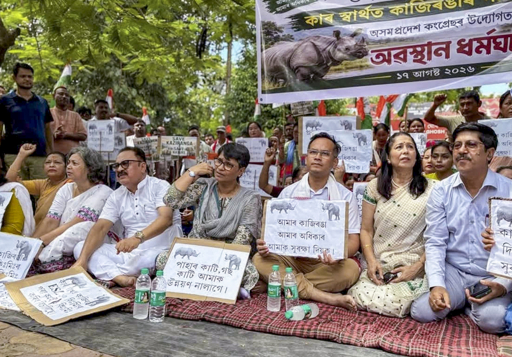
Demonstrators sit with rhino posters and banners, framing the ESZ debate as a fight for both wildlife and community futures.
Land, tourism, and the shadow of the NSA
Complicating the ESZ debate are unresolved land claims and new tourism projects. Activists and indigenous groups say that land near Kaziranga has been allotted to private hotel developers even as locals claim they have cultivated the same plots for generations, with revenue records to back them. In this charged atmosphere, the detention of indigenous rights activist Pranab Doley under the National Security Act (NSA) added a darker layer to the conflict, with critics alleging that the state is using harsh laws to silence dissent over land and conservation policy.
For many on the ground, the issue feels deeply personal: a farmer worried about losing his field, a young person hoping for tourism jobs, a mother afraid that elephants will raid crops more often if corridors shrink, and an activist who believes their community’s voice is being criminalized.
Locals march with banners on the ESZ around Kaziranga, some demanding a zone cut for development, others warning of ecological damage.
Where things stand—and what’s at stake
As of late August 2026, Assam is pushing for a formally notified ESZ of about 1–3 km around Kaziranga, instead of the 10‑km default. Fringe communities are visibly split: some see hope in a narrower zone, others fear long‑term harm to both nature and livelihoods. Protests, political rallies, and legal battles continue, with the NSA case underscoring how high the stakes have become.
At its heart, the Kaziranga clash is no longer just about maps and buffers. It is about who gets to shape the future of a landscape that is simultaneously a global conservation icon, a wildlife corridor, and home to thousands of people whose lives rise and fall with the same floods, forests, and fields that rhinos and elephants depend on.
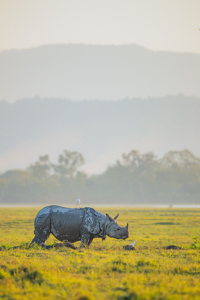
A lone rhino moves through misty grassland—a reminder that Kaziranga’s ecological value is real, but so are the human lives intertwined with it.